How to Wash Shoes in the Washing Machine (and Which Shoes to Avoid)
Sneakers yes, leather no: which shoes can go in the washing machine, what setting and water temperature to use, and how to dry them without heat.
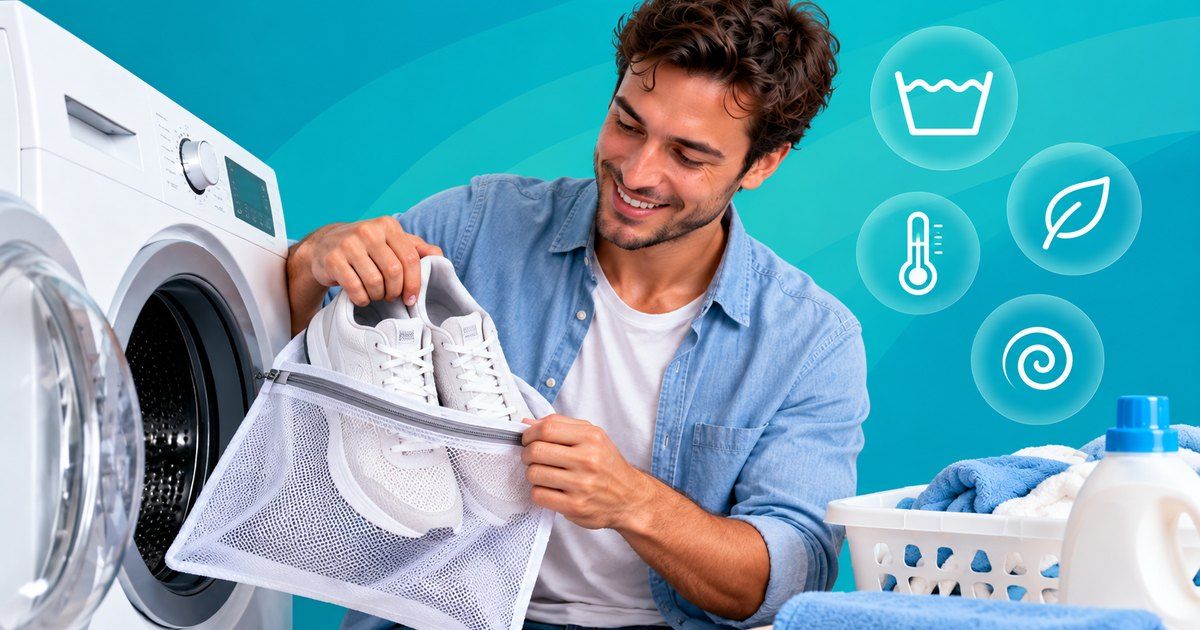
How to wash shoes in a washing machine? It works, but not for every pair. Fabric sneakers usually survive it if the maker doesn't rule out the machine, mesh running shoes only at your own risk, and leather, suede and rain boots are better left out. That protects glue, shape and washer.
What shoes can go in the washing machine?
Shoes made of fabric or synthetic fibers get through best: canvas, linen or fabric sneakers and tennis shoes, kids' textile shoes and fabric slippers. With wool, felt or membrane shoes, the maker's instructions decide; otherwise wash by hand.
Can you wash running shoes in the washer? Many makers advise against it, mesh running shoes included, because glue, cushioning and shape suffer. If your pair is marked “machine washable,” follow that; otherwise wash by hand, which is gentler; the machine is a knowing risk.
Shoes usually have no care label with washing symbols; the note is often on the maker's website. With none, as with secondhand shoes, wash by hand.
| Shoe type | Machine? | Note |
|---|---|---|
| Fabric or canvas sneakers | Yes, if the maker allows | Cold up to 86 °F (30 °C), in a bag |
| Mesh running shoes | Probably not; at your risk | Many makers advise against it |
| Kids' textile shoes | Yes, if the maker allows | No light-up soles, rubber caps, leather |
| Leather, faux leather, suede | No | Clean and care outside only |
| Shoes with heels | Better not | Glue and sole can suffer |
| Rain boots | Better not | Damp cloth; never the dryer |
| Hiking shoes, boots | No | Clean outside only |
| Battery light-up shoes | No | Wipe outside only |
| Wool, felt, membrane | Per the maker | By hand without a note |
| Work and safety shoes | Per the maker | Otherwise clean the outside |
Can you wash leather shoes in the washer?
Leather and faux leather don't belong in the washing machine, because water makes them porous and brittle. Clean only the outside with a damp cloth and care for them afterward. Suede, nubuck and velour you brush dry and waterproof.
Rain boots you clean with a damp cloth and a little dish soap. The maker doesn't name the machine; heat makes them leak, so no dryer. Shoes with heels, rhinestones, studs, sequins or metal parts can break off and damage the drum. Light-up shoes, hiking shoes and shoes with a loosening sole stay out too. For work and safety shoes, the maker's instructions apply; when in doubt, clean only the outside.
Washing shoes by hand: how it works
Brush off dry dirt, clean the shoes with a soft brush or sponge and a little mild detergent in lukewarm water, then wipe with a damp cloth. Don't submerge them; let them air-dry.
How to wash shoes in a washing machine: prep
To wash shoes in the washing machine, give them five minutes of prep. Very dirty shoes (rain, mud, a festival) are better pre-washed by hand, or the mud ends up in the drum.
- Check the note. None, even on the maker's website? Wash by hand.
- Laces out, close hook-and-loop straps. Otherwise everything tangles and no color transfers between laces and shoe. Wash the laces in the bag too.
- Insoles out. Often foam, they dry very slowly. Wipe with a damp cloth; dry separately. Medical insoles stay out of the machine.
- Brush off the worst. Knock off dry mud, pick stones from the tread, loosen stains with an old toothbrush and a dab of mild detergent.
Mesh bag, pillowcase or towels for shoes?
A mesh laundry bag or an old pillowcase with a knot is enough, no special bag needed. It keeps anything from catching on the door or gasket.
Unpadded shoes thump against the drum, which annoys in a shared apartment and strains shoe and machine. So add old, often-washed towels, ideally ones due for washing anyway, so you skip an extra load. Light towels suit light shoes; old ones that can take on color suit colorful or dark shoes.
Wash one pair per load, plus the old towels as cushion. Regular clothes stay out, because shoes release dirt and abrasion and can bleed color. Even a machine manual with a shoe cycle allows two pairs at most.
In a top-load washer with an agitator (the post in the middle of the drum), wash by hand when in doubt. In a dorm or at the laundromat, first read the house rules sign: some shared laundry rooms ban shoes.
After the cycle, check the door seal, drum and lint filter, where small stones, sand and laces get stuck. Wipe out the drum before anything delicate goes in.
What setting to wash shoes on in the washer
Temperature: Wash shoes in cold water, up to 86 °F (30 °C); at the top end that is lukewarm. Use 104 °F (40 °C) only if the shoe's or machine's instructions explicitly name it. Heat loosens glue, warps the shoe and makes colors run. 140 °F (60 °C) is too hot for shoes, and the cushioning suffers.
Cycle: Choose the delicate or gentle cycle, soft cycles with little drum movement. Permanent press only if neither is available.
Shoe cycle: If your machine has a shoe or sneaker cycle, use it and read the manual: values differ from machine to machine, and the note in the shoe also applies. With neither, pick the gentlest cycle at the lowest temperature.
Detergent: a mild color detergent or delicate detergent, liquid and sparing: no more than the package amount for lightly soiled laundry, better a little less. Powder often stays undissolved in cool water and can stick in the seams.
Use the detergent drawer as usual, not on the shoes. Leave out fabric softener; according to makers, it can attack glue and material. Bleach and DIY mixes from short videos stay out too.
Colder washes use less energy. Wash shoes only when visibly dirty or smelly, because every wash strains glue and cushioning; in between, a brush and a damp cloth are enough.
Quick decisions:
- If the shoe is white or light, use light towels and little detergent.
- If the shoe smells strongly, wash it, then dry it extra thoroughly before wearing it again.
- If the note is missing or says hand wash, the machine stays off.
Should you spin shoes in the washing machine?
You shouldn't spin shoes in the washing machine at all, or only on the lowest setting, at most 600 revolutions per minute (rpm). Set the spin to the lowest number or “no spin.” Spinning is the wringing-out at the end of the cycle. One machine manual gives this limit for its shoe cycle; some guides advise against spinning altogether.
The catch: unspun shoes come out dripping wet and take longer to dry. After the cycle, set them in the tub or on a towel to drip, and stuff them right away. A low spin speed also protects the machine: heavy shoes can loosen the drum's plastic ribs.
How to dry shoes after washing, without heat
Shoes dry after the washing machine only in the air, never with heat, not even in fall when the heating is on:
- Stuff them. White paper towels absorb moisture and hold the shape; newspaper can rub off on light shoes. Change it often.
- Air instead of heat. Put the shoes in a room-temperature draft, such as by a cracked window, or hang them by the heel on the drying rack. Without a balcony, a towel by the window or a tub or shower floor works too, just not next to a heater or vent. Avoid strong sun, which can fade colors.
- Soles separate. Let insoles dry flat next to them.
- Give it time. Plan plenty of time, longer with thick cushioning. Wear the shoes only when completely dry inside, or they smell musty.
So wash them in the evening before a day off, stuff them right after the cycle and wear a second pair meanwhile.
Common mistakes: yellow edges, loose sole
Yellow edges on white sneakers often come, according to makers, from detergent residue that reacts with oxygen and sunlight. Use little detergent, rinse thoroughly (extra rinse if your machine has one) and dry in the shade.
Loose sole: Don't wash or heat it further. Let the shoe dry, then glue it or have a shoe repair shop fix it. Wash damage can void the manufacturer's warranty.
Warped or musty: Usually heat or too little drying time. Stuff the shoe and let it dry completely again. Air out sports shoes after training, insoles loosened.
Reproofing: Fabric shoes can be reproofed afterward, meaning made water-repellent again. Use the spray only as the maker instructs, spray outdoors or in a well-ventilated area and don't breathe in the mist, because sprays can irritate the airways. Keep spray and detergent out of reach of children.
Frequently asked questions
Is washing shoes in the washing machine unhygienic?
A shoe does not reliably become germ-free at 86 °F (30 °C). The evidence covers textiles only: there, athlete's foot spores survived 86 °F (30 °C) but not 140 °F (60 °C) (a 2010 study). For shoes, 140 °F (60 °C) is too hot. With athlete's foot, wash socks and towels at 140 °F (60 °C), as far as the care label allows, and ask a doctor or pharmacist about treatment.
How often can you wash shoes in the washing machine?
As rarely as possible, only when visibly dirty or smelly. Every wash strains glue and cushioning; in between, a brush and damp cloth do.
Can washing shoes damage your washing machine?
With a bag, towels and a low spin speed, damage is unlikely. Without a cushion, shoes thump against the drum.
Can you put shoes in the dryer?
No, not in the drum. Heat loosens the glue, and dryer makers warn of fire risk with rubber and foam rubber parts. Only a dryer rack made for shoes is an exception; otherwise air-dry them.
Why do white shoes turn yellow after washing?
Usually detergent residue that reacts with oxygen and sunlight. Use little detergent, rinse well and dry in the shade.
How long do shoes take to dry after washing?
Longer than you'd think, longest with thick cushioning. One maker says insoles need at least 10–12 hours. Wear the shoes only when completely dry inside.